- Loading...
Sponsored by Dometrain Courses—Get 30% off Dometrain Pro with code ANDREW30 and access the best courses for .NET Developers


My new book ASP.NET Core in Action, Third Edition is available now! It supports .NET 7.0, and is available as an eBook or paperback.
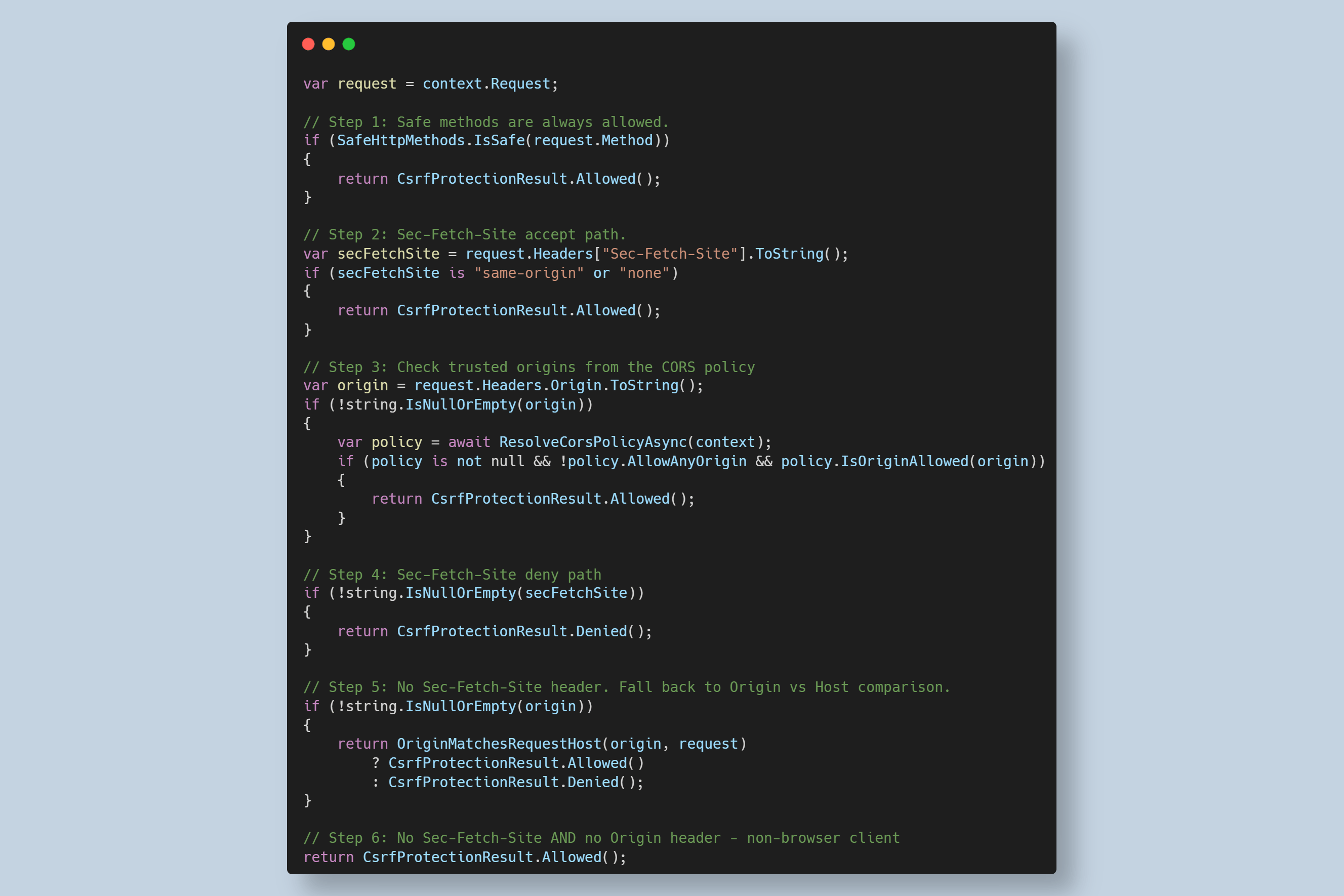
Automatic CSRF protection based on Fetch Metadata headers
Exploring the .NET 11 preview - Part 6
In this post I describe the new Cross-Site Request Forgery protection added to ASP.NET Core that uses Fetch Metadata HTTP headers instead of antiforgery tokens…

Understanding the Fetch Metadata HTTP headers: Sec-Fetch-Site and friends
In this post I describe the Fetch Metadata HTTP headers like Sec-Fetch-Site and Sec-Fetch-Mode which give information to a server about the context of a request…

Cross-Origin-Embedder-Policy: securing embedded resources
Understanding cross-origin security headers - Part 3
In this post I discuss the Cross-Origin-Embedder-Policy, the requirements it places on your resources, and why it's required for some JavaScript APIs…

Cross-Origin-Resource-Policy: preventing hotlinking and XSSI attacks
Understanding cross-origin security headers - Part 2
In this post I describe how to use the Cross-Origin-Resource-Policy to block cross-origin requests that would normally be allowed, such as in <img> tags…

Understanding cross-origin security headers
In this series I look at some of the security headers you can apply to your applications to enhance your security when interacting with cross-origin resources…

Making authenticated cross-origin requests with ASP.NET Core Identity
In this post I describe how to make authenticated cross-origin requests from the browser to an app using ASP.NET Core Identity.…